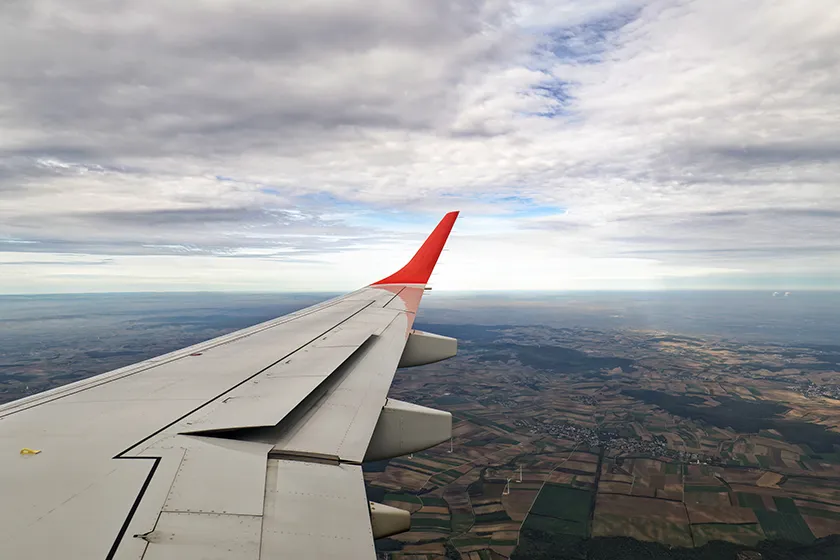
There are few places left in modern society where two people with completely opposing viewpoints are forced to sit shoulder to shoulder for nearly four hours. Airplanes may be one of the last remaining spaces where there is no escape, no mute button, no ability to hide behind a keyboard or a comment section. You are simply there together, thirty thousand feet in the air with nowhere else to go. Recently, somewhere between Kansas City and home after a turkey hunt in Missouri, I found myself seated next to someone who believed I represented everything wrong with the world.
My boarding pass read 17F. Perfect. A window seat. A wall to lean my head against. A chance to finally sleep after six straight days of filming, cooking, hunting, and surviving on roughly three hours of sleep a night. I was beyond exhausted. The kind of tired where your eyes burn, your shoulders ache, and your body starts shutting down before you even leave the gate. As I walked down the aisle during boarding group three, I was already imagining the moment the plane reached cruising altitude, and I could disappear into sleep for a few hours.
But seat 17E had other plans.
As I approached the row, I noticed a woman in her mid-fifties already settled into the middle seat. Blanket across her lap, purse perfectly organized, seatbelt already buckled as if the flight was preparing for takeoff instead of still boarding passengers. I politely smiled and said, “I’m in the window seat.” She let out an annoyed scoff before slowly unbuckling and stepping out into the aisle so I could slide past her. Right away, I knew this probably was not going to be the peaceful flight I had hoped for.
I tossed my backpack into the overhead bin, shoved my computer bag beneath the seat in front of me, and immediately reached for my AirPods. The universal sign for “I am done interacting with humanity for the day.” Before I could even get one in my ear, I felt a tap on my leg.
“So, what were you doing out here in Kansas City, Missouri?”
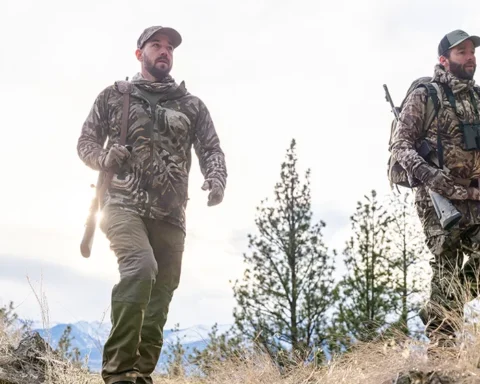
Not wanting to be rude, I pulled the AirPod out and answered politely. “I was filming an episode for a show with the National Wild Turkey Federation and Thompson/Center.
She tilted her head. “What’s Thompson/Center?”
So, I explained the firearm company’s history, the hunt we had been on, the role the NWTF plays in conservation, and how my role there was primarily as a chef who specializes in wild game cooking. We were testing out one of their new turkey guns, working with wildlife biologists, and I was cooking for camp all week.”
That was the exact moment the turbulence started, and we had not even left the ground yet.
Within minutes, she informed me that hunting was wrong, hunters were killers, and she could never understand how anyone could enjoy taking an animal’s life. Meanwhile, the young woman sitting in seat 17D quietly stared straight ahead, clearly realizing she had accidentally become front row audience to a debate she never signed up for. As the flight attendants began their safety briefing, I was essentially being verbally convicted of murder before hitting cruising altitude.
Years ago, I probably would have gotten defensive immediately. I probably would have tried to argue, to win, to shut the conversation down as quickly as possible. But over the years, I have learned something important. Most people who oppose hunting do not actually know hunters. Their understanding often comes from headlines, emotional social media posts, television stereotypes, or viral videos designed to provoke outrage. So instead of snapping back, I listened.
I listened as she explained why she thought hunting was cruel. I listened as she questioned how someone could kill an animal and then celebrate it. I listened as she assumed hunters only cared about trophies and ego. Then the plane finally took off.
About thirty minutes into the flight I politely told her, “Ma’am, I’m going to try and get some sleep. I’ve been going hard all week.” I put my AirPods in and leaned my head against the window. Surely that would end the conversation.
It did not.
A few minutes later came another tap on my leg. More questions. This time about morality, about conservation, about why hunting still exists in modern society. At that point, I realized something important. She was not trying to attack me because she hated me personally. She genuinely did not understand. And honestly, that changes everything.
So instead of shutting down, I decided to engage.
I started explaining how hunters are one of the largest contributors to wildlife conservation in North America through tags, licenses, and excise taxes placed on firearms and hunting equipment through the Pittman-Robertson Act. I explained how organizations like the National Wild Turkey Federation have spent decades restoring wild turkey populations and protecting habitat across the country. I explained how species like wild turkey, elk, whitetail deer, and waterfowl populations were brought back in large part because hunters funded and supported conservation efforts long before most people even realized those species were struggling.
At one point, wild turkey populations in many states had nearly disappeared. Today, they thrive in places where they no longer existed. That did not happen accidentally. It happened because hunters cared enough to fund habitat restoration, conservation programs, and wildlife management.
Every argument she raised, I answered calmly. But somewhere during that conversation, something shifted. The debate slowly turned into curiosity.
Instead of trying to trap me in some moral contradiction, she started asking about my life.
So, I opened my laptop.
I showed her my classes. I showed her my writings, my recipes, my blogs, and my food photography. I showed her photos of wild game dishes carefully prepared and plated with intention and respect. I explained how I teach people not only how to hunt, but how to butcher responsibly, cook properly, and fully utilize the animal. I explained my allergy to beef and processed fats, and how harvesting wild game became a way for me to continue eating meat while taking responsibility for sourcing it myself.
That part seemed to hit her differently.
Because suddenly the conversation was no longer about “a hunter.” Now it was about a person.
I explained that hunting for me is deeply tied to food, conservation, stewardship, and gratitude. Hunters are not disconnected from death. In many ways, we are more connected to it than the average consumer buying plastic wrapped meat from a grocery store without ever thinking about where it came from or what was required for it to arrive there.
By now the young woman in seat 17D had fully joined the conversation too. The poor girl who originally wanted absolutely nothing to do with any of this was now asking questions about recipes, conservation, and what wild turkey actually tastes like. Seat 17E wanted to see more food photos, so I kept scrolling.
Wild turkey roulades. Venison osso buco. Duck confit. Handmade pasta dishes with wild game sauces. Meals that told a story much bigger than antlers and social media hero shots.
She began asking questions about preparation techniques and flavors. She wanted to know how wild turkey compares to store-bought poultry and why I tried to use every possible part of the animal. Somewhere over the Midwest, two people with completely opposing worldviews stopped arguing long enough to start understanding each other.
That is something social media rarely allows anymore. Today, disagreement immediately turns into labeling. You are either good or evil, intelligent or ignorant, compassionate or cruel. There is rarely room for nuance, humanity, or conversation. But somewhere in row 17, humanity showed up.
Then suddenly I heard the captain over the intercom.
“We have started our descent.”
I looked down at the flight tracker and realized we had been talking for three hours and forty-five minutes. No nap. No movie. No quiet flight. Just conversation.
As we started descending, I asked her one final question.
“What’s your favorite chicken dish?”
She looked confused. “Why?”
I smiled and said, “Because I’m going to recreate it with wild turkey.”
She laughed for the first time the entire flight before answering. “Chicken Francese with a lemon butter sauce.”
And right there, I knew exactly what I wanted to do. Because food has always been one of the greatest bridges between people. A recipe can accomplish what arguments often cannot. It invites people to experience instead of assume, to taste instead of judge.
So, this recipe is for Seat 17E. For the reminder that conversations still matter. For the reminder that understanding rarely comes through screaming at each other online. And for the reminder that sometimes the person sitting next to you is not your enemy, they are simply someone who has never heard your story before.
Wild Turkey Francese with Creamy Lemon Butter Sauce
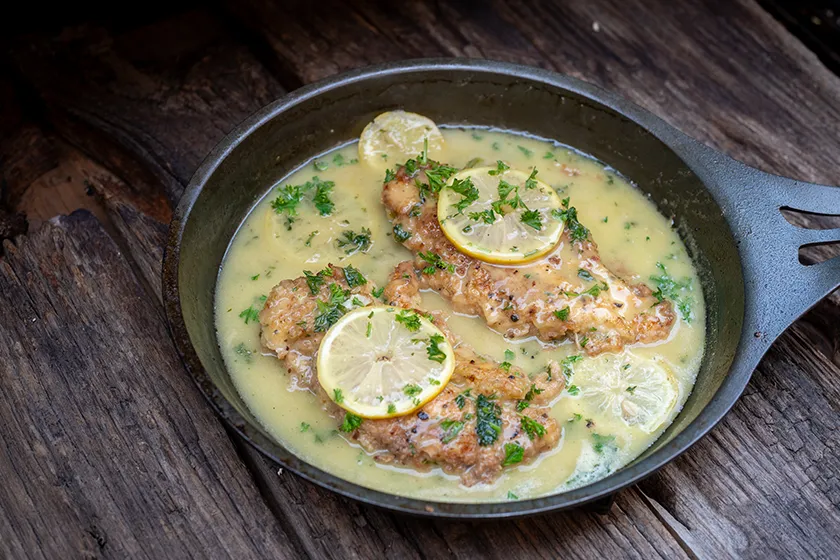
Ingredients
For the Wild Turkey
- 2 large wild turkey breast cutlets
- 1 cup all-purpose flour
- 1 teaspoon salt
- 1 teaspoon cracked black pepper
- 1 teaspoon garlic powder
- 3 eggs
- 1/4 cup whole milk
- 1/2 cup grated parmesan cheese
- 4 tablespoons olive oil
- 3 tablespoons butter
For the Sauce
- 4 tablespoons butter
- 3 cloves garlic, minced
- 1 1/2 cups chicken stock
- Juice of 2 lemons
- Zest of 1 lemon
- 1/4 cup white wine (optional)
- 2 tablespoons capers
- Salt and pepper to taste
- Fresh parsley for garnish
Instructions
- Butterfly the wild turkey breast cutlets and lightly pound them until evenly thin. Wild turkey is much leaner than domestic poultry, so an even thickness helps it cook quickly without drying out.
- In a shallow bowl, combine the flour, salt, cracked black pepper, and garlic powder.
- In a second bowl, whisk together the eggs, whole milk, and grated parmesan cheese until fully combined.
- Heat the olive oil and 3 tablespoons of butter in a large skillet over medium heat.
- Dredge each turkey cutlet in the flour mixture, coating both sides evenly.
- Dip the floured cutlets into the egg mixture, allowing any excess to drip off.
- Carefully place the cutlets into the hot skillet and cook for 3 to 4 minutes per side, or until golden brown and fully cooked through.
- Remove the turkey from the skillet and set aside on a plate.
- Lower the heat slightly and add 4 tablespoons of butter and the minced garlic to the same skillet. Sauté until fragrant, about 1 minute.
- Pour in the chicken stock, lemon juice, lemon zest, and white wine if using. Stir well and allow the sauce to simmer for several minutes until slightly reduced.
- Season with salt and pepper to taste. Continue simmering until the sauce begins to gently thicken.
- Return the wild turkey cutlets to the skillet and spoon the sauce over the top. Let everything simmer together for 2 to 3 minutes until warmed through.
- Garnish with fresh parsley and extra lemon zest before serving.
- Serve over pasta, mashed potatoes, or roasted vegetables.
And if you happen to share it with someone you disagree with, even better.
Check out more From Field to Plate on social media: Facebook/Instagram/YouTube/X