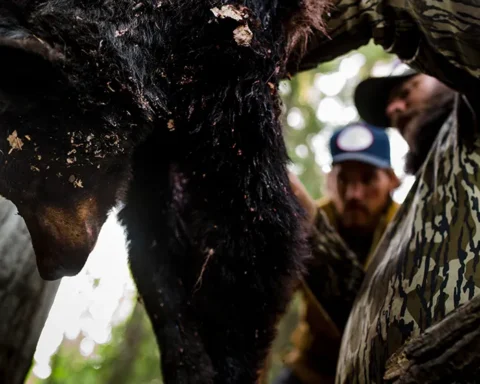
If you’ve ever butchered a deer or watched someone else do it, chances are you’ve seen those lower legs — the shanks — get tossed into the bone pile or left behind entirely. Maybe you’ve even done it yourself, thinking, “There’s not much meat there anyway.” But I’m here to tell you, if you’re leaving the shanks behind, you’re not just wasting meat, you’re missing out on one of the most flavorful, nutritious parts of the entire deer.
The Case for Taking the Shanks
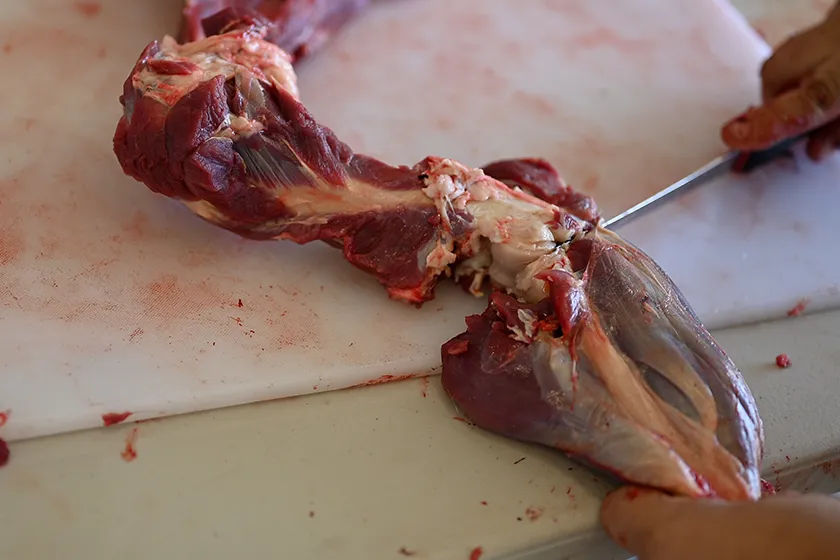
Venison shanks are the lower portions of a deer’s leg, both front and back. They’re loaded with sinew, connective tissue, and marrow-rich bone. That may not sound appetizing at first, but here’s the secret: when simmered or slow-cooked, all that connective tissue breaks down into gelatin, creating some of the richest, most luxurious meat you’ll ever eat from a deer.
Shanks are the wild game version of osso buco. They’re not just good — they’re phenomenal when given the low-and-slow treatment. Plus, utilizing them honors the animal, ensuring as little waste as possible from your harvest.
How to Properly Remove the Shanks
Removing the shanks is simple, but it does require a bit of care. Here’s a quick field guide:
- Front Shanks:
- After removing the shoulder, you’ll see the forearm portion — that’s your front shank.
- Make a circular cut just above the knee joint and then work your knife along the bone toward the elbow joint. Follow the natural seams and tendons, being mindful of the shank’s natural shape.
- Hind Shanks:
- On the hind leg, make a cut above the hock (ankle joint).
- Cut around the circumference of the leg, then trace upward along the tibia (shin bone) until you reach the large muscle mass of the upper leg.
- Free the shank from the joint carefully, keeping it intact if possible.
You can also saw the shanks into cross-cut rounds, exposing the marrow — perfect for classic braises.
Storing Deer Shanks
Once you’ve removed them, you’ve got options:
- Whole Shanks: Vacuum seal each one and freeze them whole for future slow cooking.
- Cross-Cut: Slice the shanks into 2–3-inch rounds and vacuum seal them for portion-ready meals like stews or osso buco-style dishes.
- Deboned: If you prefer, you can debone the shanks and grind the meat, but honestly, you’ll be sacrificing that gelatin-rich texture that comes from cooking them bone-in, as well as they will tend to grind tough and make your grind chewy.
How to Cook Deer Shanks
There’s no rushing a shank. The connective tissue needs time and moisture to break down, but the reward is fall-off-the-bone, melt-in-your-mouth venison.
Here are some tried-and-true methods:
- Braised Venison Shanks (Osso Buco Style)
- Sear the shanks in a heavy pot until browned on all sides.
- Add aromatics like onion, garlic, carrots, and celery.
- Deglaze with red wine or stock, add tomatoes and herbs like rosemary and thyme.
- Cover and braise in the oven at 300°F for 3-4 hours.
- Slow Cooker Venison Shanks
- Place the shanks in a crockpot with beef or venison broth, onions, garlic, and root vegetables.
- Let it cook on low for 8-10 hours. Serve with mashed potatoes or polenta for a hearty meal.
- Shank Stew
- Simmer shanks whole in a Dutch oven with stock, wild mushrooms, and herbs. Once tender, pull the meat from the bone, shred it, and return it to the broth for a silky, flavorful stew.
- Barbacoa-style Shanks
- Slow-cook the shanks with chiles, vinegar, and spices until the meat shreds easily. Serve in tacos with fresh cilantro, lime, and pickled onions.
- Shank Birria Tacos
- Scroll down for the full recipe at the end of this blog post.
Meal Ideas Using Shanks
- Venison Shank Ragu: Shred braised shank meat into a rich tomato-based sauce and serve over pappardelle or polenta.
- Wild Game Pho: Use shanks to make a nutrient-dense bone broth, perfect for a venison twist on the classic Vietnamese noodle soup.
- Shank Shepherd’s Pie: Shredded shank meat layered with veggies and topped with mashed potatoes.
- Shank and Grits: Slow-braised shank meat served over creamy stone-ground grits with a drizzle of cooking juices.
The Health Benefits of Venison Shanks
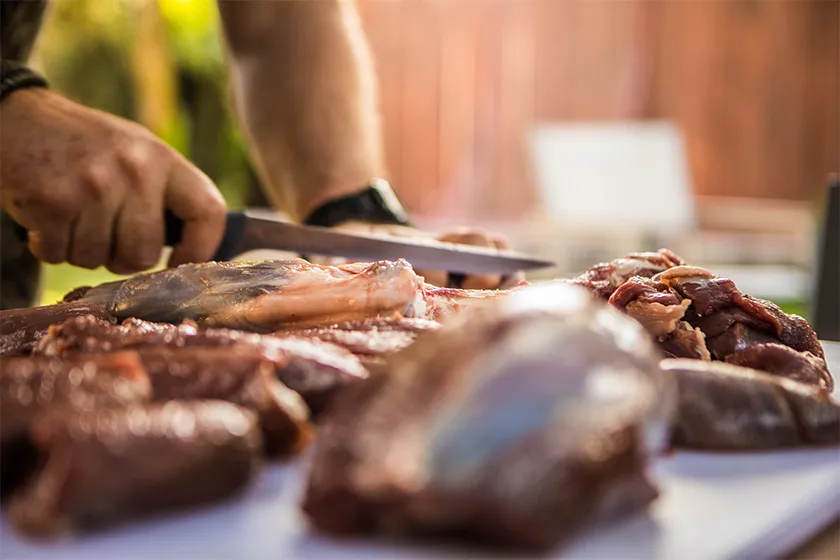
Venison itself is already a powerhouse of lean protein, but shanks offer extra nutritional benefits thanks to their connective tissue and marrow content:
- Collagen & Gelatin: The breakdown of collagen into gelatin during slow cooking supports joint health, skin elasticity, and gut health.
- Marrow Nutrients: If you cross-cut the shanks, the bone marrow infuses the dish with minerals like calcium, phosphorus, and iron, along with healthy fats.
- Protein: Like all venison cuts, shanks are rich in bioavailable protein with minimal fat, perfect for those on high-protein, low-fat diets.
- Micronutrients: You’ll also get a boost of zinc, selenium, and B vitamins that support immunity, metabolism, and energy levels.
The Forgotten Gold
So next time you’re field dressing a deer, don’t look at the shanks as scraps. Look at them as the hidden treasure they are — culinary gold that just needs a little time and patience to shine. You’ll get more meals, better nutrition, and the satisfaction of knowing you honored your harvest fully.
The shank might be tough on the hoof, but at the table, it’s pure comfort food — wild, rich, and deeply satisfying.
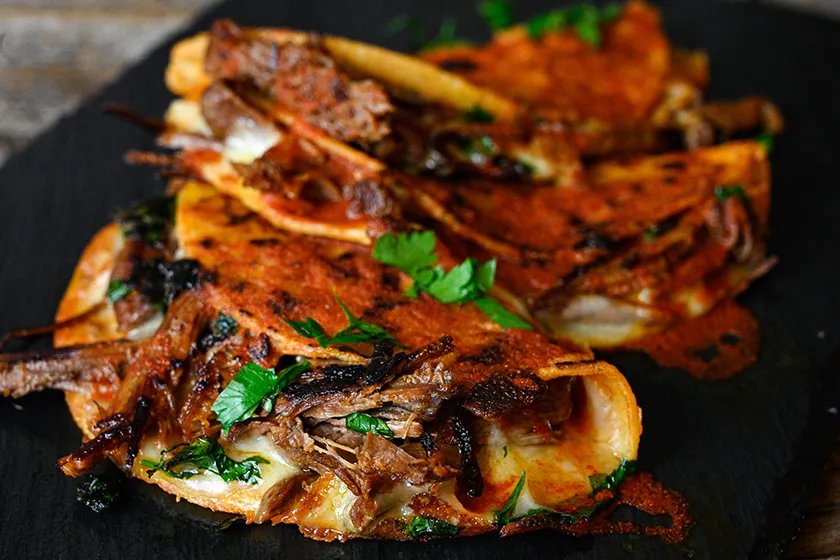
Shank Birria Tacos
- 2 lbs. Shanks
- 3 dried guajillo chiles
- 2 dried ancho chiles
- 2 dried pasilla chiles
- 1 medium onion, quartered
- 4 garlic cloves
- 2 bay leaves
- 1 teaspoon cumin seeds
- 1 teaspoon black peppercorns
- 1 teaspoon dried oregano
- 1 teaspoon thyme
- 1 cinnamon stick
- 4 cups beef broth (or water)
- 2 tablespoons apple cider vinegar
- Salt to taste
- Olive oil for browning the meat
For the Crispy Cheese-Covered Corn Tortillas:
- 8 corn tortillas
- 2 cups shredded Mexican cheese blend (or cheese of choice)
- 1 cup cooking liquid
- Olive oil for frying
Instructions
Preparing the Birria:
- Rehydrate the Chiles: Remove stems and seeds from the dried chiles. Toast them lightly in a dry skillet over medium heat until fragrant, then soak them in hot water for 20 minutes until softened.
- Make the Sauce: Blend the soaked chiles with their soaking liquid, onion, garlic, cumin seeds, black peppercorns, oregano, and thyme until smooth. Add a bit of beef broth, if needed, to achieve a smooth consistency.
- Cook the shanks: Heat olive oil in a large pot or Dutch oven over medium-high heat. Brown the Shanks on all sides.
- Simmer: Return the browned meat to the pot. Pour the Chile sauce over the meat, then add the beef broth, apple cider vinegar, bay leaves, cinnamon stick, and salt to taste. Bring to a boil, then reduce heat to low, cover, and simmer for 2-3 hours until the meat is tender and shreds.
- Shred the Meat: Once the meat is tender, remove it from the pot, remove bones, and shred it with two forks. Return the shredded meat to the pot and mix it with the sauce.
Making the Crispy Cheese-Covered Corn Tortillas:
- Heat the Skillet: Heat a non-stick skillet over medium heat.
- Add the Cheese: Sprinkle a small handful of shredded cheese directly onto the skillet in a circular shape, slightly larger than the size of a tortilla.
- Place the Tortilla: Dip the tortilla in cooking sauce, quickly place a corn tortilla on top of the melting cheese along with some Birra, and press down slightly with a spatula.
- Crisp the Tortilla: Allow the cheese to crisp up and adhere to the tortilla, about 2-3 minutes. Once the cheese is golden and crispy, carefully flip the tortilla to warm the other side for about 30 seconds. Do this until all tacos are made
Serving
- You can also add toppings like chopped onions, cilantro, and a squeeze of lime.
- Pour a little bowl of the sauce, or as we call it, consommé, and serve it with each plate.
Jeremiah Doughty
From Field to Plate
Check out more From Field to Plate on social media: Facebook/Instagram/YouTube/X