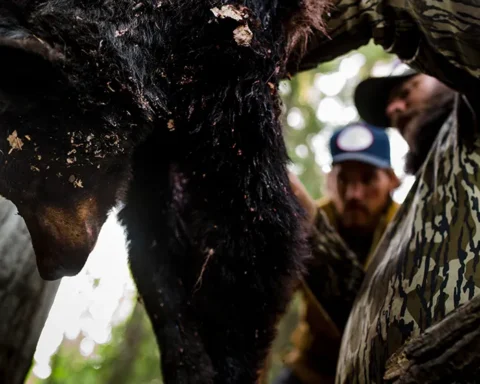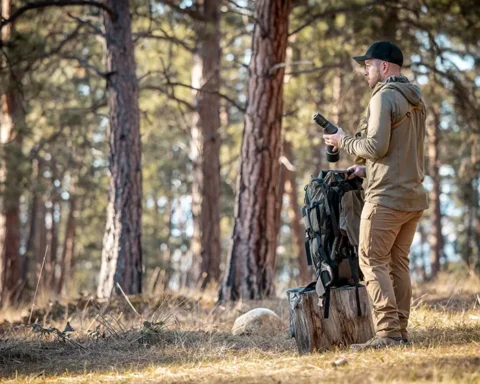
Some trips feel like work. Others feel like a homecoming you did not know you needed. As I sat on the plane headed from California to Illinois, I kept thinking about what the week ahead might hold. I could almost smell the damp hardwoods and see the rolling farmlands of central Illinois stretching out under a cold November sky. I had been invited to chase big old whitetails with Gregg Ritz, the owner of Thompson Center and host of Hunt Masters TV, and the chance to return to his ground was something I was not about to pass up.
I hunted turkeys there this past spring, and that short visit left a mark on me. His land and leases hold a kind of quiet beauty you can only understand when you set foot in those hardwood ridges at first light. While we were walking after gobblers, I was invited back for a hunt, butcher, and cook session with the crew. I jumped on it the moment the words left his mouth.
I thought I knew what hunting from a tree stand felt like, but I had never climbed forty-five feet up a tree and watched the world wake up from a place that felt closer to the clouds than the dirt. The forest slowly stretched itself awake beneath us. Turkeys pitched down from their roosts and scratched around in the leaves. Songbirds fluttered from limb to limb while the wind hissed through bare branches. It was peaceful until the morning chaos of young bucks chasing does broke the silence under us. They stormed through like teenagers late for curfew, sending birds flying and leaves swirling.
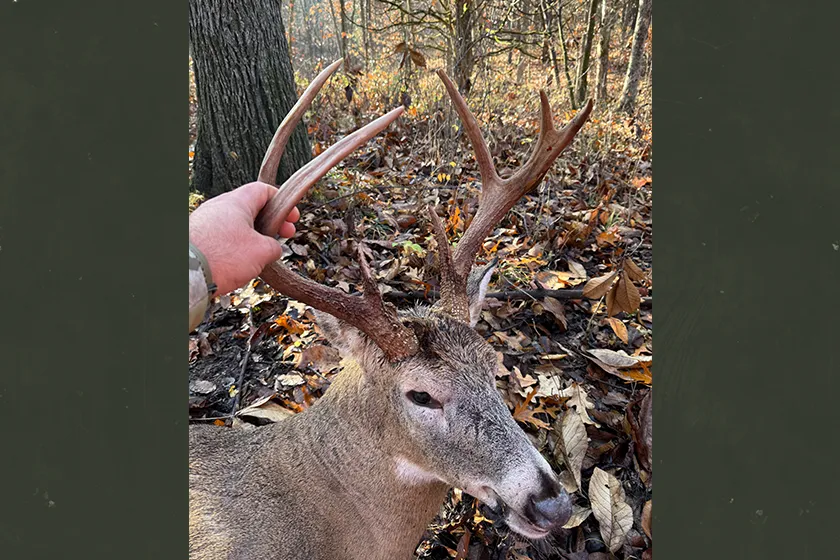
As the rain moved in and the temps dropped, we climbed down and shifted gears. We made our way to an old cornfield and settled into a box blind that overlooked a stretch of land known for holding several target bucks. One of them was an old bruiser with a blocky body and a face worn by years of surviving winters and hunters. Some folks called him TS. Others called him Meatball. I figured either name fit, and all I knew was that I had a handful of new recipes waiting for a chance to come alive.
Illinois keeps things interesting. Only straight-walled rifles, black powder, or shotguns are allowed. This trip gave me the chance to carry the new 350 Legend carbon fiber barreled rifle from Thompson Center. I had been itching to put this thing to work.
As the light cast longer shadows, a handful of does slip into the field first. Young bucks trailed behind them, sparring and pushing each other around like kids wrestling in the front yard. At about one hundred and sixty yards, right at the edge of the field, I finally caught sight of him. Old TS. The cornfield Meatball himself.
He paced back and forth in the shadows, refusing to step fully out into the open. The rain began to fall again, the kind that chills you through your jacket. He finally eased forward and gave me a window. That is when the world slowed down.
I had to calm my breathing. The 350 Legend drops sharply past one hundred and fifty yards, and this was going to require trust in the math. Trust in the time on the range. Trust in the work. I steadied my breath, pulled the hammer back, and waited for him to pause.
He never did.
So, I created my own shot window. Rain tapping on the blind roof, heart beating loud enough to drown it out, I pulled the trigger. The hammer slammed forward. The round found its mark. The buck kicked, dropped his head, and sprinted for the timber. Sixty yards later, he fell, and the hunt shifted from pursuit to purpose.
The Real Work Begins
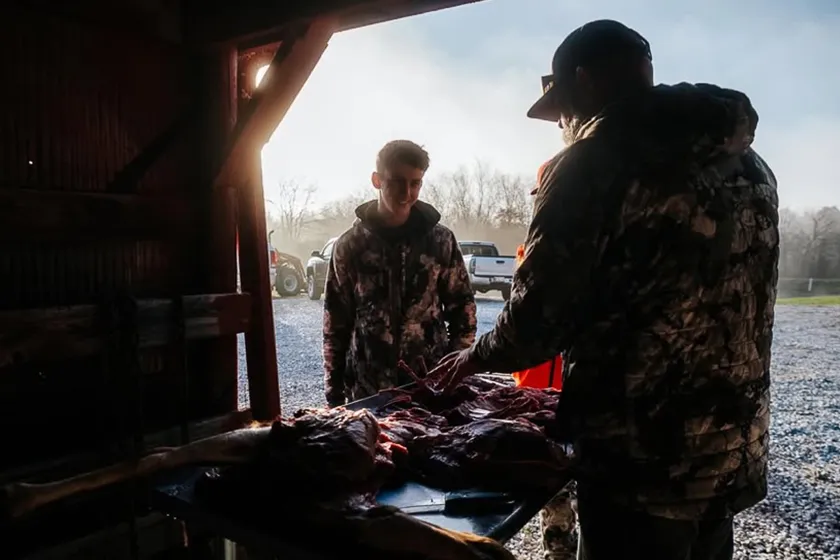
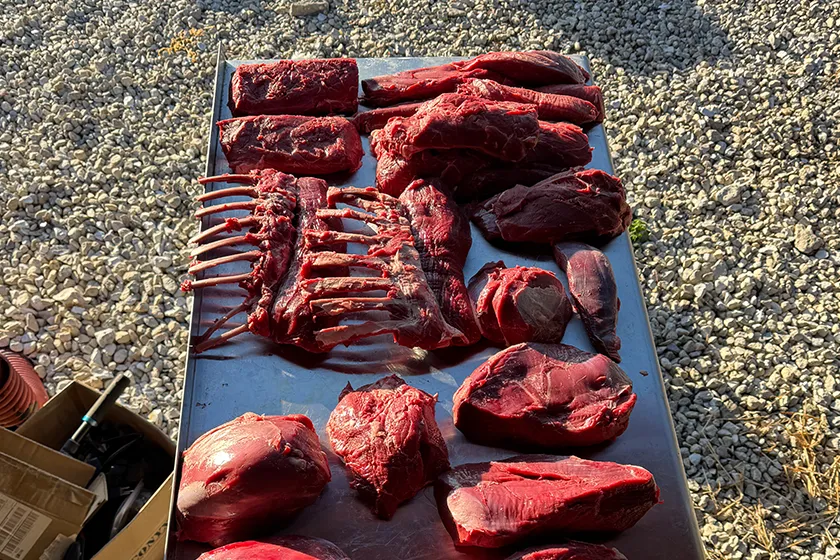
Harvesting an animal is only the beginning. The story unfolds in the skinning, trimming, butchering, and cooking. Back at camp, the rest of the crew headed out to fill their tags while I stayed behind in the cabin. It was quiet. Just me, my knives, a little music, and a beautiful deer that deserved the best I could give it.
I butterflied the backstrap and set it in a marinade while I worked on a sauce. My first thought was a cranberry and red wine reduction, but once I tasted it, I knew it was not the direction I wanted to go. So, I pivoted. That is what good cooks do. I took a cup of that reduction and started shaping it into a smoky cranberry and red wine barbecue sauce. One taste and I knew that was the winner.
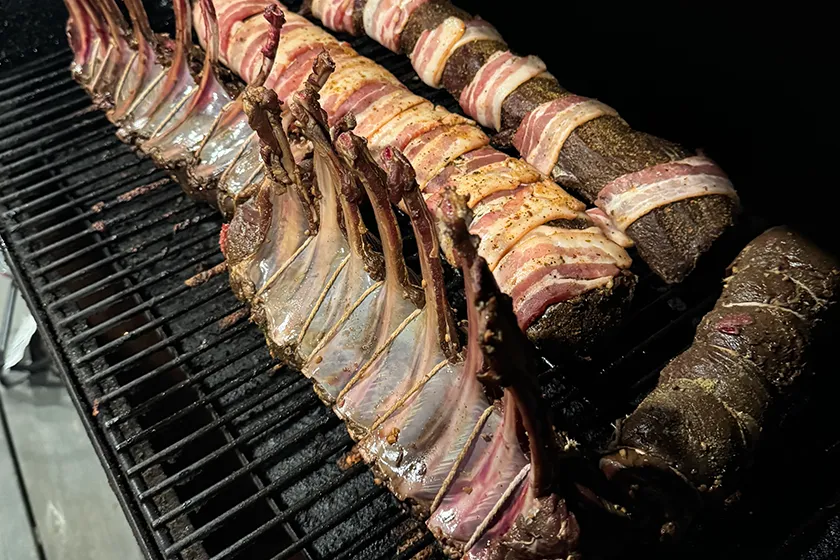
I pulled the venison from the marinade and stuffed it with a smoky cranberry mixture before tying it up and setting it on the grill. Near the end, I began brushing on the barbecue sauce. It caramelized into a glossy crust that smelled like a promise.
When the crew finally walked back into the cabin, boots muddy and spirits high, they stopped dead in their tracks. You know dinner is a winner when the smell alone can freeze a room.
We filled plates with Hasselback potatoes, sautéed garlic green beans, and thick slices of stuffed venison dripping with smoky barbecue sauce. A true trophy dinner. Not because of antlers or score but because every bite carried the weight of the hunt, the land, the work, and the respect behind the meal.
Stories rolled as fast as the food disappeared. We talked through the shot, the rain, the nerves, the woodsmoke, and how a simple cranberry sauce turned into something far better. It became one of those nights that remind you why we hunt and why we gather. Hunting is never just about the harvest. Cooking is never just about the plate. It is the ground that grows both stories and meals. It is the work behind the work. It is the moments around a table when a hunt becomes a memory, and a meal becomes part of the tale.
The hunt gives the meat, but the work gives it meaning.
Red Wine Cranberry BBQ Sauce
Ingredients
1 cup fresh cranberries, rinsed
1 cup dry red wine
1 cup ketchup or tomato sauce
¾ cup brown sugar
1 small onion, minced fine
3 garlic cloves, minced and smashed into a paste
2 tablespoons apple cider vinegar
2 tablespoons Worcestershire
1 teaspoon liquid smoke
1 teaspoon Dijon mustard (Or dried mustard)
1 teaspoon smoked paprika
1 teaspoon kosher salt
1 teaspoon cracked black pepper
1 tablespoon butter to finish
Directions
1. In a medium saucepan, add the cranberries and red wine. Bring to a gentle simmer. Cook for 10 to 12 minutes until the berries pop and soften. Mash the cranberries and cook until the mixture has reduced by half.
2. Stir in the onion, garlic, brown sugar, ketchup, vinegar, Worcestershire, mustard, paprika, salt, pepper, and the liquid smoke. Mix until combined. Bring back to a boil, then reduce the heat.
3. Lower the heat to low and let the sauce simmer gently for 15 to 20 minutes. Stir often to prevent scorching. The sauce will thicken as it cooks.
4. Use an immersion blender or let the mixture cool slightly and blend it in a regular blender. Blend until smooth and glossy. (Unless you want a chucky BBQ sauce, which is killer also)
5. Return the sauce to low heat. Stir in the tablespoon of butter for a silky finish. Taste for balance. Add more sugar for sweetness, more vinegar for tang, or more liquid smoke for depth.