In the broad category of hunting scopes it can often be hard to pick one out that makes sense for whitetail deer. What reticle should I pick? What magnification do I need? Does the objective lens make any difference? In this blog we are going to run down the best optic choices for the whitetail deer hunter.
Location
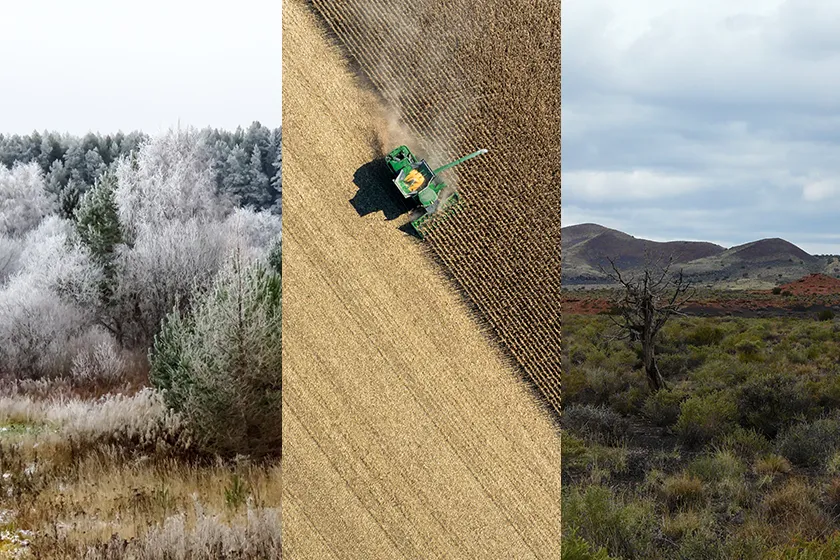
We can’t talk about what optic is the best for whitetail deer hunting without talking about location first. The whitetail deer is one of the most adaptable big game animals in North America. This is shown in the places they call home. They live in the northern states among the thick timber all the way down to the swamps of the south, and in between the croplands of the Midwest. Whitetails are even found in the desert. With this vast location difference, it changes what optics you should be using to effectively hunt them. If you want, feel free to read all the location highlights or jump to the location you find yourself in.
Thick Timber
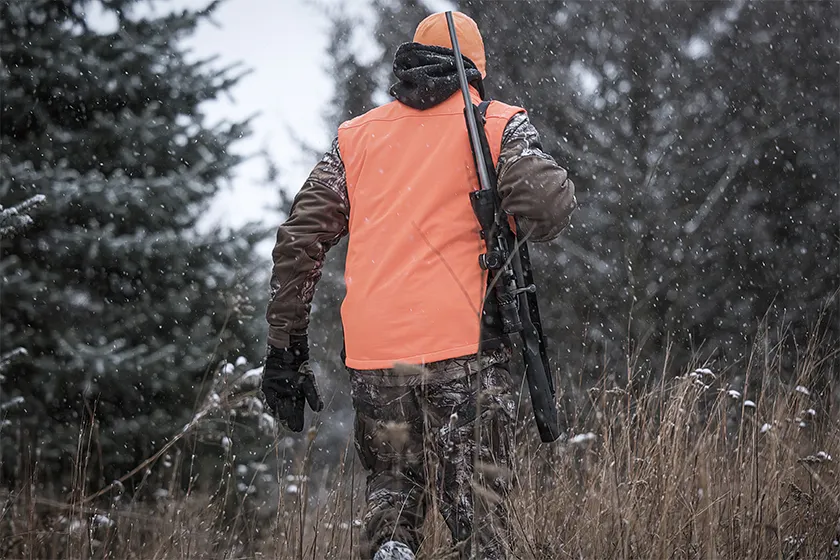
When whitetails reside in the thick timber of states like Wisconsin and New York they rely heavily on the cover it provides. This often makes for close encounters while hunting them. Most of your shots won’t stretch out past 50 yards. That said, let’s dive into what features your optic should have.
- Magnification: Considering most of your shots will be at close range you will want to grab an optic with a magnification that starts around 2 or 3.
- Reticle: For a reticle, something like a duplex is all you need. There is no reason to clutter up your image with a busy reticle when you don’t need the benefits of one. Illumination is also something you should consider, sometimes dark trees can make your reticle disappear in your scope.
- Light Transmission: Light is an important factor when it comes to picking out a scope for dense timber. You’ll want to pick a scope with a larger objective lens to help transmit the available light into your scope for a clear image as it gets darker.
Given all these factors we’d recommend the following scopes for thick timber locations:
- 5 Primal 2-12×44 IR – This scope is a good mix of the above features. It’s the perfect magnification for close or long range, the reticle is simple with an illuminated dot, and it lets in the perfect amount of light without being too bulky. If we had one choice for a thick timber whitetail hunting optic this would be the one.
- 3 Primal 3-12×56 – A great choice for hunters that don’t mind a little extra bulk with the benefit of sitting in the stand longer. This optic has a 56mm objective lens that uses the maximum available light in an area and transmits it back to your eye. This gives you that clear image that other scopes can’t in the darkest environments.
- 1 Primal 3-9×40 – The tried and true optic used by many whitetail hunters. There is a reason this magnification is so popular, because it works. This optic has a duplex for simple aiming and enough power for any shot you’ll find in the woods. It’s basic but sometimes that’s all you need.
Agricultural Land
In this type of land deer take full advantage of human farm land. Corn, beans, and wheat are ideal food sources for whitetails. They’ll often take cover in nearby groves and creek bottoms. This makes for some great hunting along the tree lines of fields, often presenting short or long range shot opportunities. So what should you look for in an optic?
- Magnification: For this style of hunting you need to be prepared to take either short or long range shots. The magnifications that work best for this are anything on the low end with a 3 to 4 and a high end of 15 to 18.
- Reticle: For this hunting location you have some options for more advanced reticle styles. The classic duplex is an option to consider, but if you need some elevation holds for the longer shots those are available too. Since most of your view will be a field in the background, opting for a busier reticle is ok since you don’t have any tree branches in the way of your view to confuse you.
- Light Transmission: This is not a crazy factor to consider when hunting in open spaces because the available light is not hindered by trees and other obstacles like mountains.
In this type of location we’d recommend the following optics:
- 3 Primal 4-16×44 – This optic is offered in two different reticle styles, a heavy duplex and the DHR which has 2 MOA holds and a center dot. These are both useful given the area you’ll be shooting in. The magnification also covers every range you need and you have good light transmission with the 44mm objective lens.
- 3 Primal 3-15×44 LW – An optic also geared towards the ability to take close or long range shots. The XRP reticle has 2 MOA holds with a solid line center. This optic is also exceptionally lightweight, so if you plan on doing some spot and stock hunting or just don’t like a heavy setup this is the optic for you.
- 5 Primal 3-18×50 – This rifle scope has a first focal plane reticle that looks similar to a duplex on low power but MIL holds come into view as you magnify. With a 34mm tube and a 50mm objective the light transmission is great, keeping you in the field as long as you need to take the shot. The optic is also great for the people who want to spend time shooting long range in the off season.
Open Land
Whitetail deer have a very different way of life in these spaces compared to the other two habitats. Without the forests, crops, and creek bottoms to hide in they have to use the rolling terrain to their advantage. You’ll find these deer nestled near large rocks, bushes, and fence lines, often staying low and out of sight. These deer also rely heavily on their eyesight, if they see you a couple hundred yards away they will disappear before you have a chance to get a shot off. This is where good optics and good shooters come into play. If you want to take a whitetail here you’ve got to be equipped. What do we mean by equipped? Find out below.
- Magnification: When you are taking long range shots you want to have a good magnification to do so, this isn’t the place for a 3-9. You want to think large overall, something that is around 3-6 at the low end, with the upper end near 15 or above.
- Reticle: Odds are you will have to compensate for wind or bullet drop on a shot with some distance. That said you’ll want a reticle to help compensate. Using a reticle with either MIL or MOA holds is ideal. Either measurement unit is good, pick whatever one you are most comfortable with.
- Light Transmission: Similar to hunting in dense forest, open landscapes can get dark fast when the sun goes on the other side of a mountain. For this reason you want to pick something with an objective lens of 44-56 millimeters.
Our top optic picks for this area:
- 5 Primal 3-18×50 – This scope has a first focal plane reticle that gives you a clean duplex on low power and precise MIL holds on higher powers. It has a 34mm tube and 50mm objective giving great light transmission, keeping you in the field longer when it matters. Also with capped turrets you get protection on your adjustments so your shot won’t have you guessing.
- 5 Primal 3-15×44 LW – This light weight optic is perfect for trucking through the back country. The reticle features 2 MOA holds perfect for lining up long distance shots. The magnification finds itself in a sweet spot for all shots you can possibly take in the field.
- 5 Conquer 5-25×56 – Not one in our Primal line but important on this list for open landscape hunters. The 5-25 magnification has the power to really stretch your range in the field, meaning no more missed opportunities. Not only can you hold your shot with the reticle but you can also make an adjustment with your turrets. The light transmission on this scope coupled with 6 stops of illumination will ensure a clear picture of your target and reticle when it comes time to take the shot.
Making A Choice
Is there a perfect whitetail hunting scope out there? As you can see with all the options listed in this blog, the answer is no. But, what it comes down to is the hunter themselves. What are you most comfortable with given your deer stand or trekking grounds? By matching your optic to the area you hunt, you have a great starting point to what you consider the perfect whitetail optic. The next step that follows is practicing with it at the range and in similar cover that you hunt. Once you have the confidence in yourself and your gear, you’ve found the perfect scope.