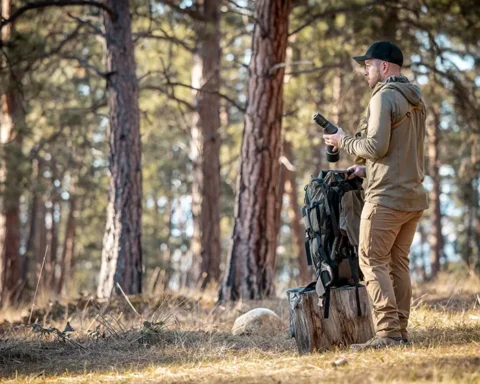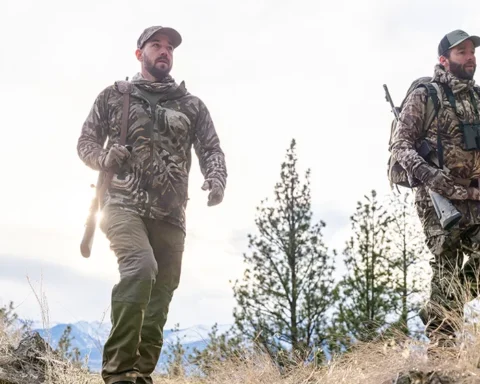
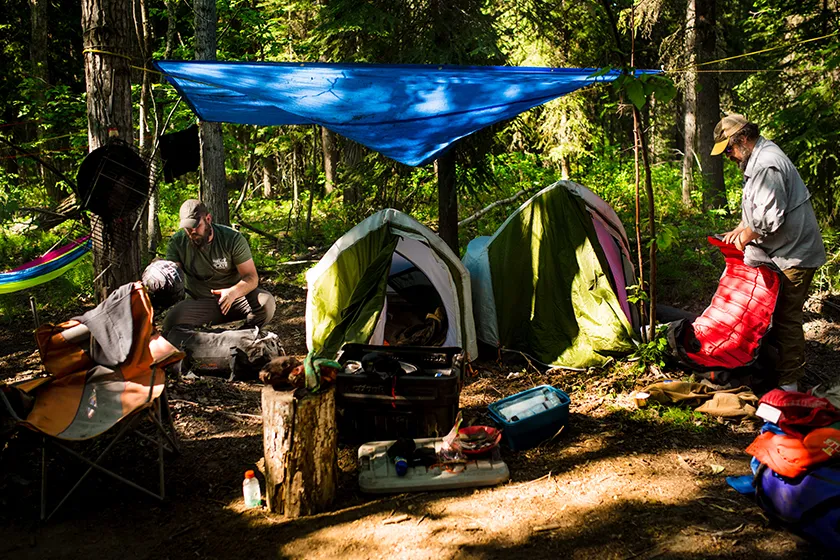
Some hunting trips begin when you step into the woods; others begin the moment the airplane touches down. Alaska was the latter. From the moment we landed in Fairbanks, everything seemed to get bigger. The country was bigger, the distances were bigger, the rivers were bigger, and even the days themselves seemed bigger. We had traveled north to meet up with some buddies and chase black bears in the country they called home, but this wasn’t going to be a hunt from a lodge with warm beds, hot showers, and meals waiting when we returned. We headed way up the Yukon River, setting camp along the bank, sleeping in tents, cooking whatever we had over an open fire, and spending our days in a homemade tree stand, waiting for a black bear to wander into our lives.
After meeting up in Fairbanks and getting our gear together, we made our way toward Yukon River Camp, where the boat would finally hit the water and the real adventure would begin. There are certain places whose names alone carry a little extra weight, and the Yukon River is one of them. I had heard the name my entire life, seen it on maps, watched it in hunting shows, and read stories about the people who had traveled it long before us. Now I was sitting in a boat with my gear piled around me as we pointed the bow upriver and started traveling deeper into Alaska.
If you’ve never been on the Yukon, it’s difficult to explain the scale of it. You can look at pictures and watch videos, but none of that prepares you for actually being there. Mile after mile of wilderness passes by while the river just keeps going. There is something incredibly humbling about realizing how small you are in a place like Alaska. Back home, we measure distance by exits, stoplights, gas stations, and towns. On the Yukon, distance is measured by bends in the river, changing banks, fuel in the tank, and how long you’ve been sitting in the boat. Civilization slowly disappears behind you until the world begins to feel a little more like it probably did hundreds of years ago.
Eventually we split off the main river and we found our place along the riverbank and started making camp. The tents went up, gear was unloaded, food was secured, hunting equipment was organized, and firewood was gathered. When you’re that far from town, organization suddenly matters a little more. There is no running back to the store because you forgot something. What you brought is what you have, and you learn pretty quickly that the wilderness doesn’t care whether you packed correctly.
That first evening, once camp was established, we built a fire and cooked moose meat over the open flame. There was nothing complicated about it, and there didn’t need to be. Moose, fire, smoke, friends, and the Yukon River rolling past us made a pretty incredible dinning room. I’ve eaten meals prepared by some amazing chefs, and I’ve been lucky enough to cook wild game in some incredible places, but there is something about eating an animal in the country where it lived that changes the meal.
Maybe it’s the smoke from the fire or the exhaustion from traveling. Maybe it’s the fact that you’re sitting on the ground instead of in a dining room table. Or maybe food simply tastes better when the scenery around you reminds you exactly where it came from.
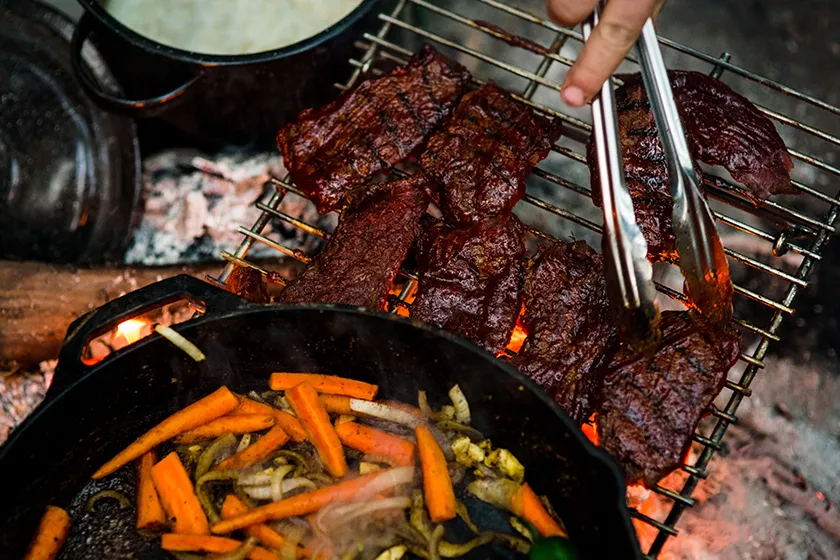
We sat around the fire talking as the evening stretched on, except evening in Alaska during that time of year doesn’t really behave like evening anywhere else. The sun barely wanted to set. With close to 23 hours of daylight, your body keeps telling you that the day should be ending while the sky keeps telling you there is plenty of time left. It creates a strange rhythm. There is always enough light to fish a little longer, check one more spot, tell one more story around the fire, or hunt for another few hours. For a hunter, it almost feels like somebody forgot to start the clock.
Eventually we climbed into our tents, grabbed what sleep we could, and got ready for our first morning in the tree. The next day we made our way to the hunting area and climbed into a homemade tree stand that would become our home for the next several hours. Somehow, a group of buddies from different parts of the United States had all traveled thousands of miles and ended up sitting together in the same tree in Alaska. We settled in, watched the woods, and talked quietly. Hunting has a funny way of creating conversations that probably never would have happened anywhere else. Give a group of people enough hours in a tree stand, duck blind, boat, or around a campfire and eventually the stories start coming out.
We watched and waited, but that first morning Alaska didn’t give us a bear. That’s hunting. It doesn’t matter how far you traveled, how much money you spent getting there, or how badly you want something to happen. Nature doesn’t owe you an animal. Sometimes you hike for miles and see nothing. Sometimes you sit in a tree until your back hurts and hear nothing. Sometimes the most memorable part of the morning is the conversation you had with the people sitting beside you. Eventually we climbed down and headed back toward camp, deciding that if Alaska wasn’t going to provide a bear that morning, maybe the river would provide dinner.
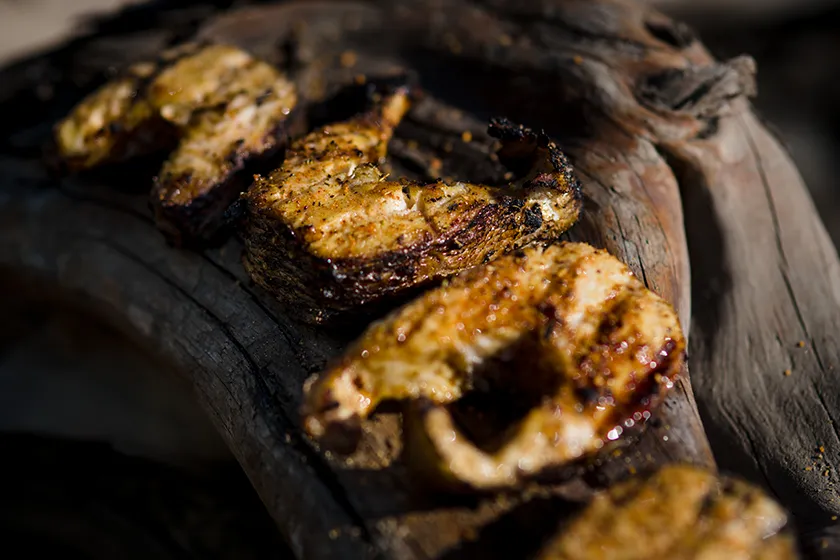
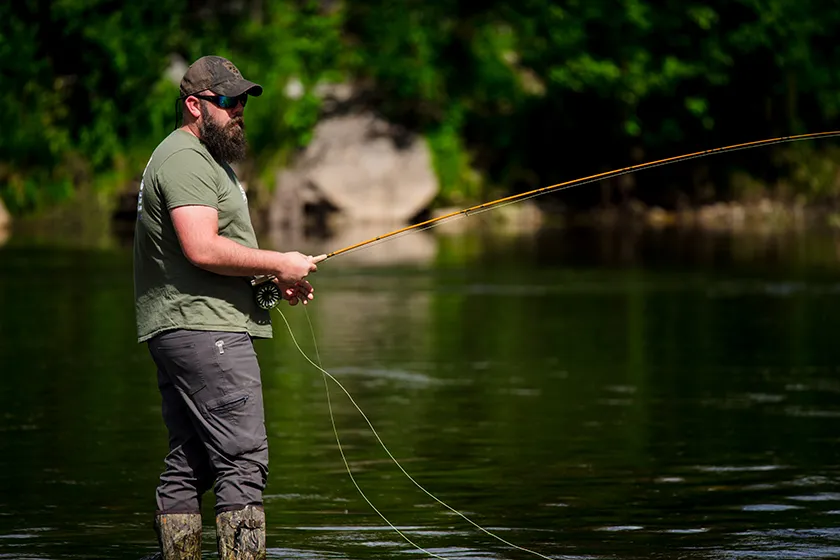
We grabbed the fishing gear and went looking for northern pike. Before long, we had exactly what we needed. Fresh pike became dinner, cooked over the open flame beside the same river it had just come from. It was another simple meal, but that was quickly becoming one of my favorite parts of the trip. There is a rhythm that develops when you spend enough time away from civilization. Hunt, fish, gather wood, cook, eat, sleep, and do it all over again. Life becomes remarkably uncomplicated. You stop checking the clock every five minutes. You stop thinking about emails and schedules. Your priorities become food, shelter, weather, animals, fire, and the people sitting around you.
Of course, Alaska has a way of reminding you that paradise always comes with a price, and in our case that price was mosquitoes. I don’t know what kind of government-funded steroid program Alaskan mosquitoes are on, but they are on another level. We fought them around camp, fought them while cooking, fought them while standing around talking, and eventually surrendered, climbed into our tents, zipped everything shut, and passed out.
The next morning we woke up and headed right back to our spot. Same tree, same woods, same group of friends, but something about that morning felt different. We climbed up, settled in, and started another long sit. A couple of hours passed before the woods finally gave us the sound every hunter recognizes. Somewhere beyond what we could see, a branch cracked.
Conversation stopped.
We listened.
Another crack came from the timber, and suddenly every sense became sharper. There is a difference between the random noises of the woods and the sound of an animal moving with purpose. Hunters learn to recognize that difference, and when you hear it, your entire body changes. Your eyes start searching for movement. Your ears try to determine direction. Your breathing becomes deliberate. Another branch broke, and then movement appeared through the cover.
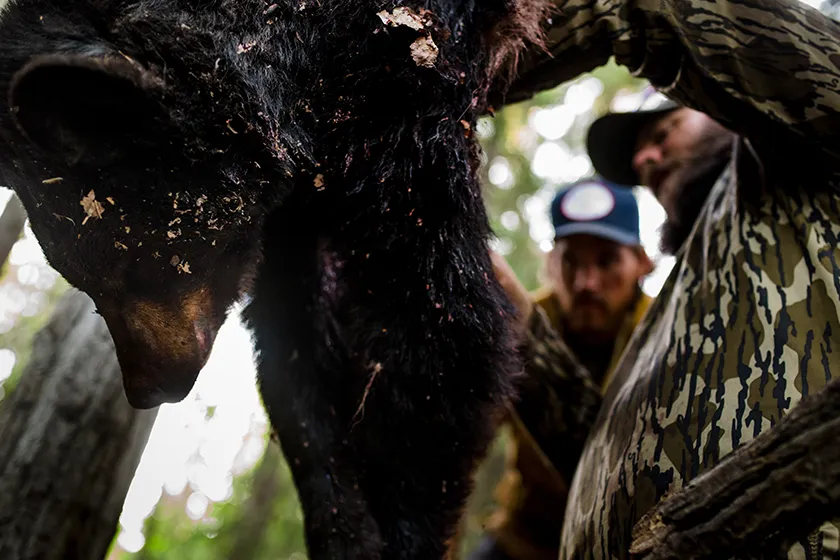
My first Alaskan black bear stepped into the open.
It’s amazing how quickly a moment can arrive after you’ve spent so much time waiting for it. We had flown thousands of miles, traveled from Fairbanks to the Yukon, loaded a boat, run upriver, built camp, cooked meals over the fire, sat for hours in a tree, fished for dinner, fought mosquitoes, slept on the ground, and climbed back into that stand again. All of that time and effort suddenly collapsed into a few seconds.
I took a deep breath, said a quick prayer, settled myself, and pulled the trigger.
The shot broke through the Alaskan wilderness, followed by the unmistakable death roar of a black bear. Then the woods went quiet again. I stayed sitting there for a moment and simply tried to take everything in. There are moments in hunting when excitement takes over, but there are other moments when something deeper happens. You realize exactly where you are, what just happened, and how unlikely it was that all the pieces of life lined up perfectly enough to put you there.
I was sitting in a homemade tree stand in Alaska with friends from across the country, looking down at my first Alaskan black bear. I didn’t need to say much. I just sat there in awe of the moment and thanked God for allowing me to experience it. I was thankful for the animal, thankful for the opportunity, thankful for Alaska, and especially thankful for the friends sitting in that tree beside me. Hunting has brought some incredible animals into my life, but more importantly, it has brought incredible people into it.
Years from now I may forget exactly how many hours we sat there or how long the boat ride took, but I will remember the sound of that branch cracking. I’ll remember that bear walking into the opening. I’ll remember taking that breath and saying that prayer. Most of all, I’ll remember who was sitting beside me when it happened.
The funny thing about hunting is that people often think the trigger pull is the finish line. In reality, that’s when the real work begins. Now there was an animal on the ground, and with that came responsibility. Pictures are easy. The work that follows is where respect for the animal really shows itself. We climbed down, approached the bear, took a moment to appreciate him, and then went to work. Knives came out, sleeves went up, and the process of caring for the meat began.
Breaking down an animal in the field is one of my favorite parts of hunting because it connects the hunt directly to the meal. This isn’t simply an animal that was harvested. This is food. Every cut matters. Keeping the meat clean matters. Cooling it properly matters. Taking your time matters. The animal deserves that effort, and the people who will eventually sit around the table eating it deserve it too. A successful hunt isn’t measured only by whether an animal hits the ground. Success is getting that animal from the field to the plate while wasting as little as possible along the way.
Once the bear was broken down and everything was packed, we began working our way back toward the boat. That ride back to camp felt different from every other boat ride we’d made. On the way upriver there had been anticipation. Every bend held the possibility of what might happen. Now there was a sense of gratitude and accomplishment. We had meat with us, a story none of us would forget, and still plenty of work waiting when we got back.
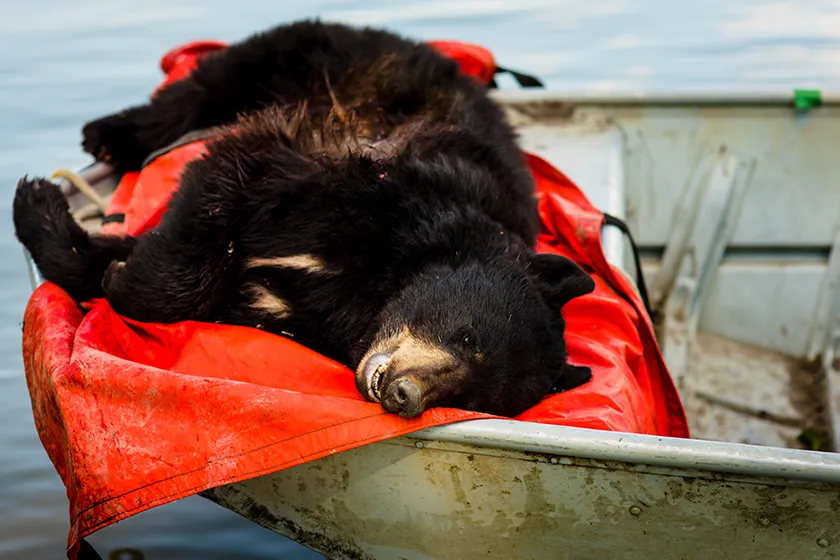
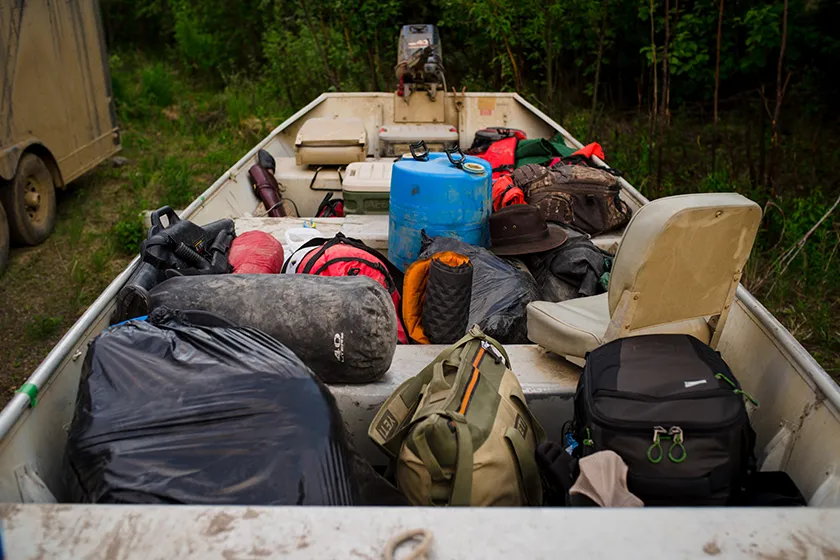
Camp had to come down. Meat had to be cared for. Gear needed to be organized. Tents were broken down, sleeping bags were rolled, trash was collected, equipment was packed, and the place we had temporarily called home slowly started looking like a riverbank again. I think that part matters. As hunters, we talk a lot about respecting animals, but respecting the places those animals live is part of the same responsibility. If we’re willing to travel thousands of miles to experience wild country, we should be willing to put in the extra effort to leave it as wild as we found it.
Eventually the boat was loaded, everything was strapped down, and we pushed away from the bank for the long ride back down the Yukon. I found myself watching the country pass by differently than I had on the way in. When we first headed upriver, I was wondering what Alaska might give us. Now I was thinking about everything it already had. Moose cooked over an open fire, fresh pike from the river, nearly endless daylight, conversations in a tree stand, mosquitoes that could probably carry away a small child, and my first Alaskan black bear. We had come looking for a hunt and ended up with something much bigger.
After the long ride downriver and eventually making our way back to my buddy’s house, there was really only one way this trip could properly end. We needed to cook.
That black bear became an Irish Black Bear Stew, slowly simmered with vegetables, potatoes, herbs, and a rich broth until the meat became tender and everything came together into the kind of meal that makes people stay at the table a little longer. After sleeping in tents, eating beside the river, traveling mile after mile by boat, and living in the Alaskan wilderness, sitting around a table with a bowl of hot stew felt like the perfect ending.
But that bowl was more than dinner.
That’s the thing I love most about wild game. When you cook an animal you’ve hunted, you’re not simply eating meat. You’re eating memories. Every bite of that stew carried a piece of the trip with it. The flight into Fairbanks, meeting our buddies, loading the boat at Yukon River Camp, the long ride upriver, setting up our tents along the bank, moose sizzling over the fire, 23 hours of daylight, that homemade treestand, an empty first morning, catching pike for dinner, fighting mosquitoes, hearing those branches crack, watching that black bear step into the opening, taking a breath, saying a prayer, squeezing the trigger, hearing the roar, and sitting silently afterward, trying to understand just how blessed I was to be there.
All of it eventually ended up around that table.
That’s why I believe the meal is such an important part of the hunt. The hunt shouldn’t end with a picture of an animal on the ground. It should end around a table. It should end with knives and cutting boards, cast iron and fire, recipes and stories. It should end with people passing bowls around while somebody says, “Remember when…”
The animal gets one final opportunity to bring people together.
My Alaskan black bear hunt will always be remembered for the bear, but it will never only be about the bear. I’ll remember the Yukon River stretching endlessly in front of us. I’ll remember eating moose beside the fire while the sun refused to disappear. I’ll remember fresh pike, mosquitoes, tents, boat rides, and long hours sitting in a tree with good friends. I’ll remember the sound of those branches cracking and the few seconds when a black shape finally appeared through the Alaskan wilderness.
Most of all, I’ll remember sitting around that table at the end of it all with a bowl of Irish Black Bear Stew in front of me, realizing that the entire adventure had come full circle.
From the river, to the tree, to the knife, to the pot, and finally to the table.
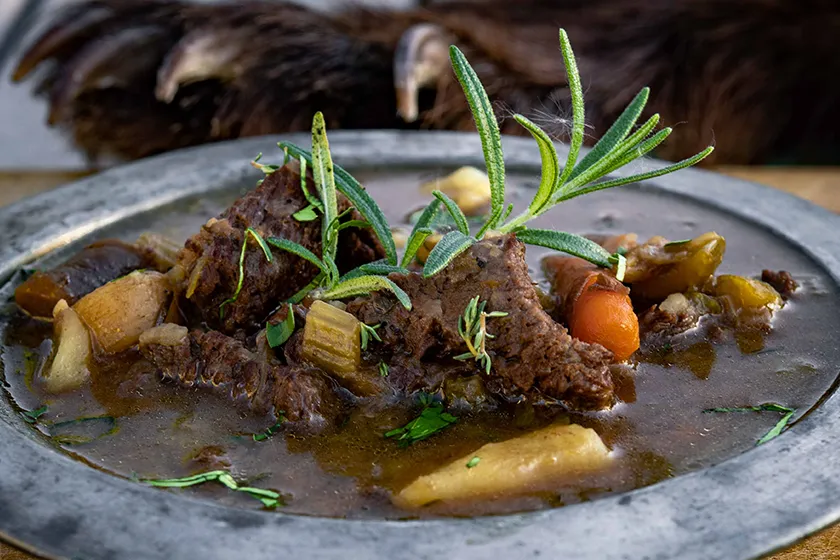
Black Bear Stew
Rich, hearty, and built for a cold evening, this black bear stew slowly braises the meat in red wine, herbs, and stock until fork tender. Pearl onions, mushrooms, and carrots are browned separately before being added at the end, giving the finished stew great texture and a deep, savory flavor.
Ingredients
- 1 tablespoon unsalted butter
- 2 tablespoons olive oil, divided
- 2 pounds black bear steak or chuck, well trimmed and cut into 1½-inch cubes
- Kosher salt, to taste
- Freshly ground black pepper, to taste
- 1 cup finely chopped yellow onion
- 1 tablespoon finely chopped garlic
- 1 tablespoon all-purpose flour
- 1 (750 ml) bottle dry red wine
- 2 cups beef or wild game stock
- 2 bay leaves
- 1 sprig fresh thyme
- 1 sprig fresh rosemary
- 15 pearl onions, peeled
- 15 cremini mushrooms, sliced
- 15 baby carrots
- ¼ cup water
- Pinch of sugar
- Fresh parsley, chopped, for garnish
Directions
Preheat the oven to 350°F.
In a large enameled cast iron Dutch oven, melt the butter with 1 tablespoon of the olive oil over medium-high heat. Pat the bear meat dry and season generously with salt and freshly ground black pepper.
Working in batches if necessary, arrange the bear meat in a single layer in the Dutch oven. Brown for about 8 minutes, turning occasionally, until a deep crust develops on all sides. Avoid overcrowding the pot, as you want the meat to brown rather than steam.
Add the chopped onion and garlic to the Dutch oven. Cook over medium heat for about 5 minutes, stirring occasionally, until the onion begins to soften.
Sprinkle the flour over the meat and onions, then stir until everything is lightly coated. Cook for another minute to remove the raw flour flavor.
Slowly pour in the red wine and stock, scraping the bottom of the Dutch oven to loosen all of the browned bits. Add the bay leaves, thyme, and rosemary. Season with additional salt and pepper as needed and bring the liquid to a gentle boil.
Cover the Dutch oven and transfer it to the preheated oven. Braise for 2 to 3 hours, or until the bear meat is completely tender and easily pulls apart with a fork.
While the stew finishes cooking, prepare the vegetables. Heat the remaining tablespoon of olive oil in a large skillet over medium-high heat. Add the pearl onions, mushrooms, and baby carrots along with ¼ cup water and a pinch each of sugar, salt, and pepper.
Bring to a boil, cover, and reduce to a simmer. Cook for about 15 minutes, or until most of the water has evaporated and the vegetables are nearly tender. Remove the lid, increase the heat, and cook for another 3 to 5 minutes, tossing occasionally, until the vegetables are tender and nicely browned.
Remove the bay leaves and herb stems from the finished stew. Stir about half of the browned vegetables into the Dutch oven, then spoon the stew into bowls and scatter the remaining vegetables over the top.
Finish with freshly chopped parsley and serve hot.
Wild Game Tip: Black bear should always be cooked thoroughly because it can carry Trichinella parasites. For a stew like this, the long braise is ideal because it allows the meat to reach a safe temperature while also breaking down tougher connective tissue and creating incredibly tender meat.
Check out more From Field to Plate on social media: Facebook/Instagram/YouTube/X